Dental second opinion · Bharuch
A clearer second opinionbefore you decide.
A second opinion is not about proving another dentist wrong. It is a fresh examination of the diagnosis, the available evidence and the reasonable treatment paths—so you can decide with confidence.
What it should do
A useful second opinion reduces uncertainty without creating new confusion.
The review begins with your concern, medical history and any records you already have. The dentist then examines the area and decides whether existing images are sufficient or whether another view is genuinely needed.
You should leave knowing what appears urgent, what alternatives exist, what the trade-offs are and which questions remain unanswered. If the original plan is sound, a good second opinion should be able to say so.
What we review
Evidence first,treatment second.
01
The diagnosis
What finding explains the pain or problem, and how certain is that conclusion?
02
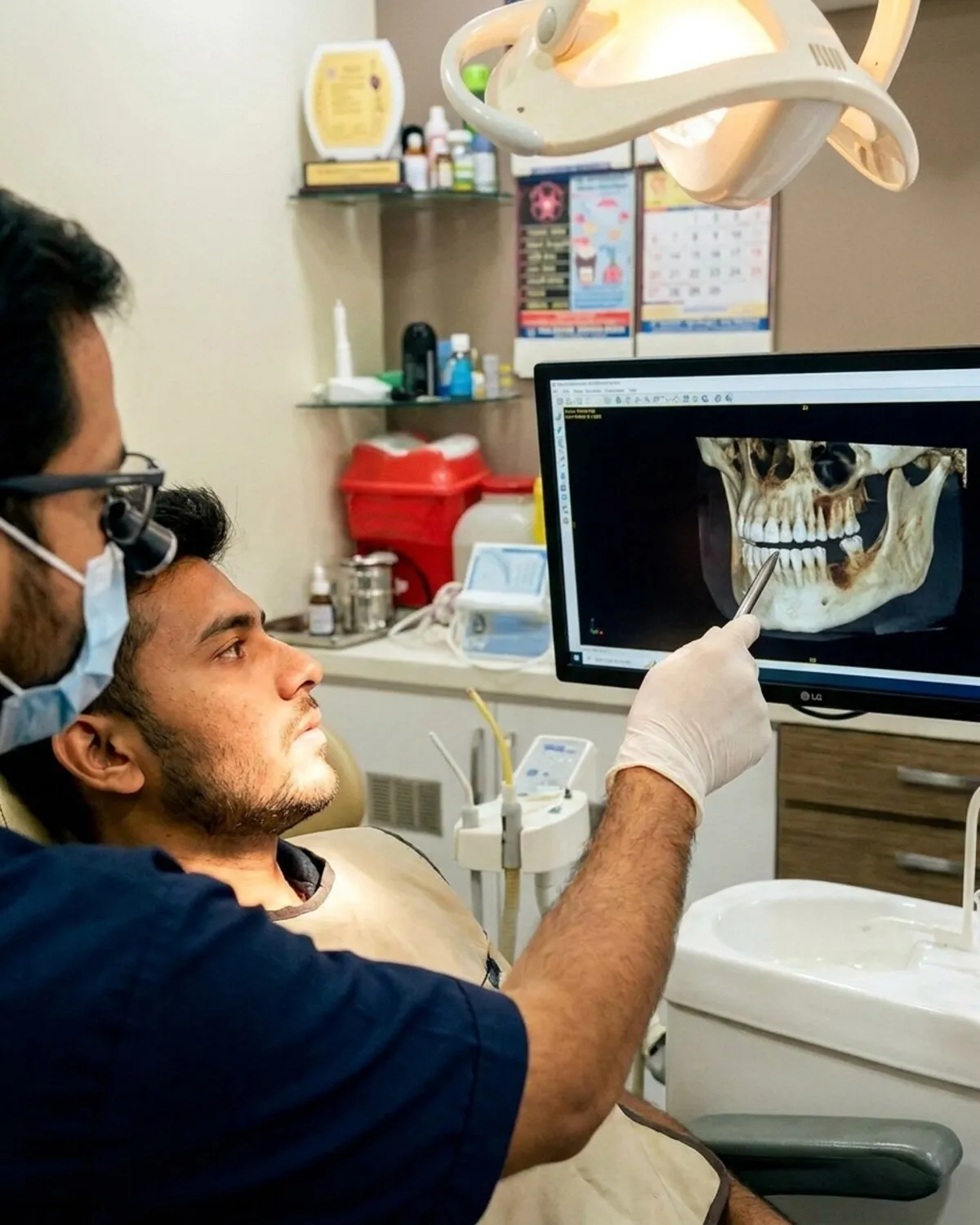
Existing X-rays and scans
Are the images recent and clear enough, or is a different view needed for a specific reason?
03
Treatment alternatives
Can the tooth be monitored, repaired, treated, replaced or left alone—and what does each path involve?
04
Timing and urgency
What needs attention now, what can be planned and what may happen if you wait?
05
Visits, recovery and maintenance
How many appointments, what recovery is typical and what ongoing care will the result require?
06
Written next steps
A clear summary helps you compare plans without relying on memory after the appointment.
Before your review
Bring the record,not the pressure.
Relevant care
Examine first,then choose.
Bharuch dental guides
More usefulbefore you book.
Second opinions
Understand the planbefore the procedure.
Bring your X-rays, reports and questions. We will review what is known, what is uncertain and what the options mean.