
Guides · 18 August 2026
Getting dental work done on a trip to India
It is a sensible plan, and it fails in exactly one way: arriving with ten days and a treatment that needs six weeks.
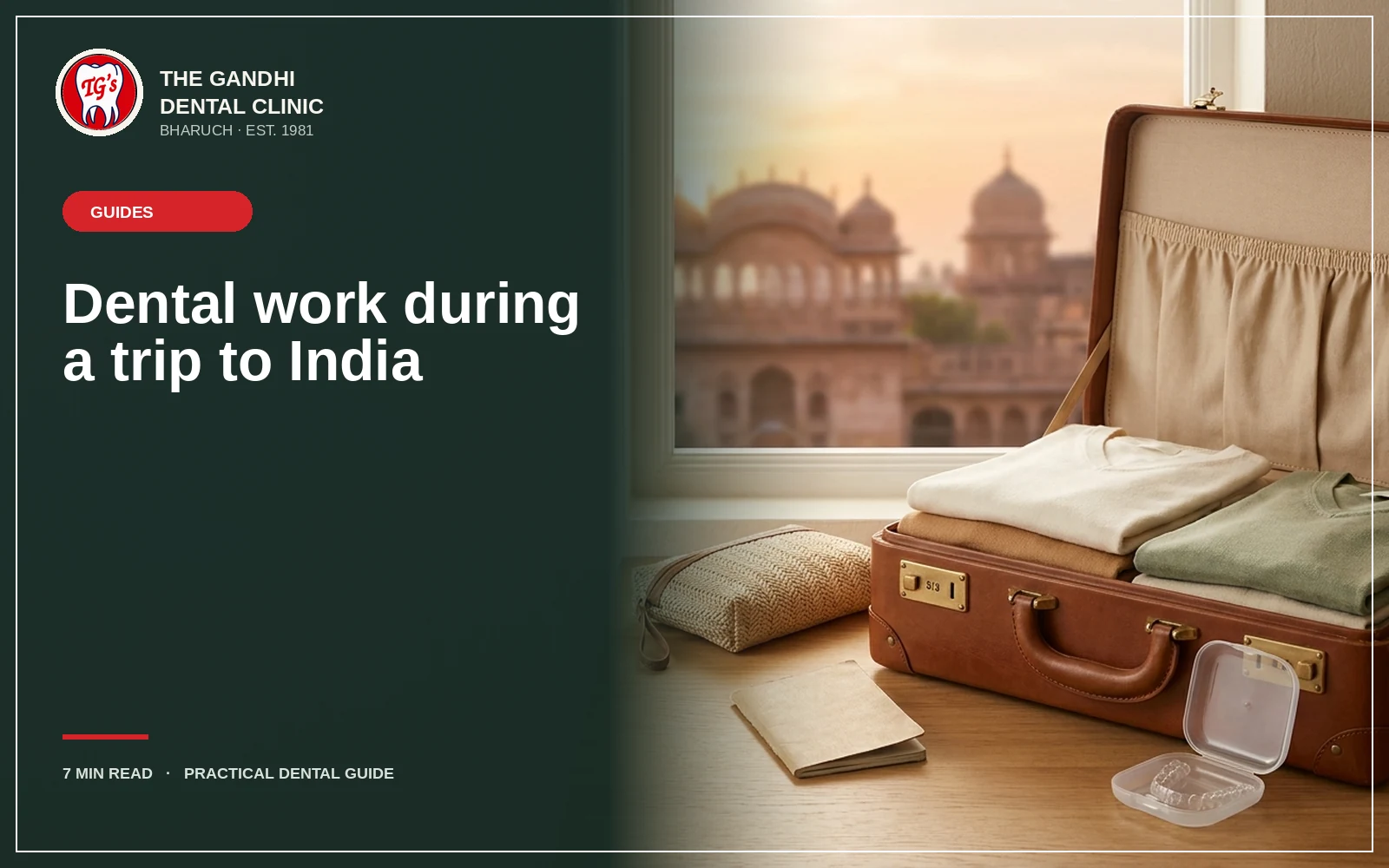
A great many families who live in the Gulf, the UK, the US or East Africa have their dentistry done when they come home. The economics are obvious and the standard of care available is genuinely good. What goes wrong is almost always scheduling.
Start before you fly
Email the clinic weeks ahead with photographs, any recent radiographs and a note of what is troubling you. A practice worth using will tell you what realistically fits your dates — including when the answer is that it does not. Book the first appointment for the day after you land, not the day before you leave. That one decision prevents most of the trouble.
Roughly how long things take
- Cleaning, fillings, a simple extraction — one visit.
- Root canal plus crown — usually two visits across about a week, sometimes three.
- Surgical wisdom tooth — one visit, but leave a week before flying; you do not want to be at altitude on day two.
- A full set of crowns — plan two weeks.
- Implants — months, not weeks. Placement and the final crown are usually separate trips.
- Aligners or braces — a year or more. These need a plan spanning two visits and a dentist where you live for the middle.
The rule that matters most
Do not begin anything that cannot be finished or safely paused before you leave. A temporary crown failing in another country, or a root canal left open, turns a saving into an expensive emergency in a system where nobody has your records. Any clinic willing to start such a case on a ten-day trip is telling you something about how it makes decisions.
What to bring
- Any radiographs or records from your dentist abroad, digital is fine
- A current list of medication, including blood thinners and bisphosphonates
- Details of medical conditions, particularly diabetes and heart valve history
- Your dentist's email, so records can go back to them afterwards
Before you fly home again
Ask for written notes on what was done, the materials used, and any radiographs taken — sent to you and, if you want, to your dentist abroad. Ask what to do if something loosens or hurts after you land, and who to contact. A practice that hands you nothing on the way out has not finished the job.
Honest caveats
Follow-up is the weak point of treatment done far from home, and no amount of good work removes that. Complex implant and orthodontic cases are usually better done where you live unless you visit predictably. And flying within 24–48 hours of oral surgery is best avoided — pressure changes and a fresh socket are a poor combination.
None of this argues against having treatment in India. It argues for having the right treatment, planned around the days you actually have.
General information only. It is not a substitute for an examination — book an appointment for advice about your own teeth.
Common questions
Questions people ask
Gandhi Dental Clinic · Bharuch
Care built overgenerations.
Plan your visit with our dental team.