Prevention · 22 June 2026
What tobacco and gutkha do to your mouth — and the signs to check for
Oral cancer is one of the most common cancers in India, and one of the most survivable when it is caught early. The checking takes two minutes.
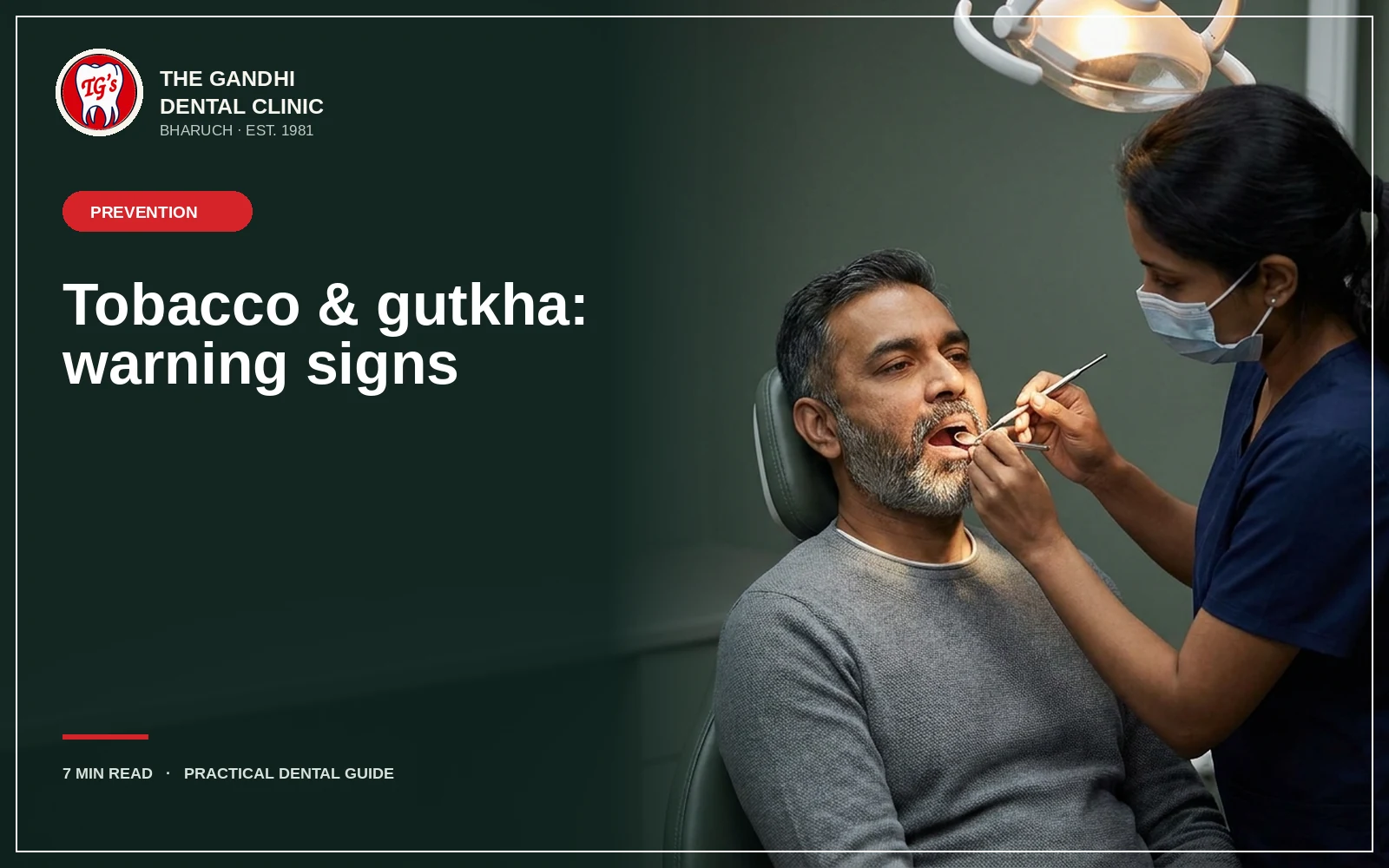
This is the most important article on this site, and the one people are least likely to read. If you or someone in your family chews gutkha, mawa, pan masala or supari, or smokes, please read to the end.
Why it matters here specifically
India carries a very large share of the world's oral cancer, and the driver is chewed tobacco and areca nut rather than smoking alone. In an industrial district where a great many people work long shifts, chewing is common, socially normal, and rarely treated as a medical issue until something has already changed in the mouth.
What happens, in order
- Staining and gum recession come first, along with wear where the quid sits.
- Reduced mouth opening. Areca nut makes the tissues of the cheek fibrous and stiff. This is oral submucous fibrosis — a recognised pre-cancerous condition, and the loss of opening is largely permanent.
- White or red patches that do not rub off. A proportion of these become malignant.
- An ulcer that does not heal. This is the one that matters most.
The signs to check for, once a month
In front of a mirror, in good light. Pull the cheek out on each side, lift the tongue, look underneath it, look at the gums and the roof of the mouth. You are looking for:
- Any ulcer or sore that has not healed within two weeks
- A white or red patch that will not rub away
- A lump, thickening or rough patch anywhere in the mouth
- Numbness in the tongue or lip with no obvious cause
- Difficulty or pain on swallowing, or a persistent sore throat
- A reduction in how wide you can open your mouth
- A tooth that has loosened with no gum disease to explain it
Any of these lasting more than two weeks needs looking at. Not next month — within two weeks.
The part that should give you hope
Oral cancer caught early is among the more treatable cancers, and the mouth is one of the few places where a pre-cancerous change can be seen directly, with no scan and no blood test. That is an enormous advantage, and it is wasted almost entirely because people do not look, and do not mention what they find.
Late presentation is what kills, and late presentation is usually embarrassment or fear rather than lack of access.
What happens at the clinic
Every routine examination here includes a look at the soft tissues — cheeks, tongue, floor of mouth, palate — and the lymph nodes in the neck. It takes about two minutes and is not something you have to ask for.
If something needs watching, you will be told plainly and reviewed. If something needs a specialist opinion or a biopsy, you will be referred promptly. Nobody here will lecture you about the habit, and nobody will pretend it does not matter either.
If you are trying to stop
The tissue changes of submucous fibrosis do not fully reverse, but stopping halts the progression and substantially lowers the risk from that point on. It is worth doing at any stage, including late. Tell your dentist you are trying — we would rather help than judge.
General information only. It is not a substitute for an examination — book an appointment for advice about your own teeth.
Common questions
Questions people ask

Gandhi Dental Clinic · Bharuch
Care built overgenerations.
Plan your visit with our dental team.