Treatments · 18 July 2026
Wisdom tooth pain: what helps tonight, and what actually fixes it
The pain usually comes from the gum, not the tooth — which is why it keeps coming back.
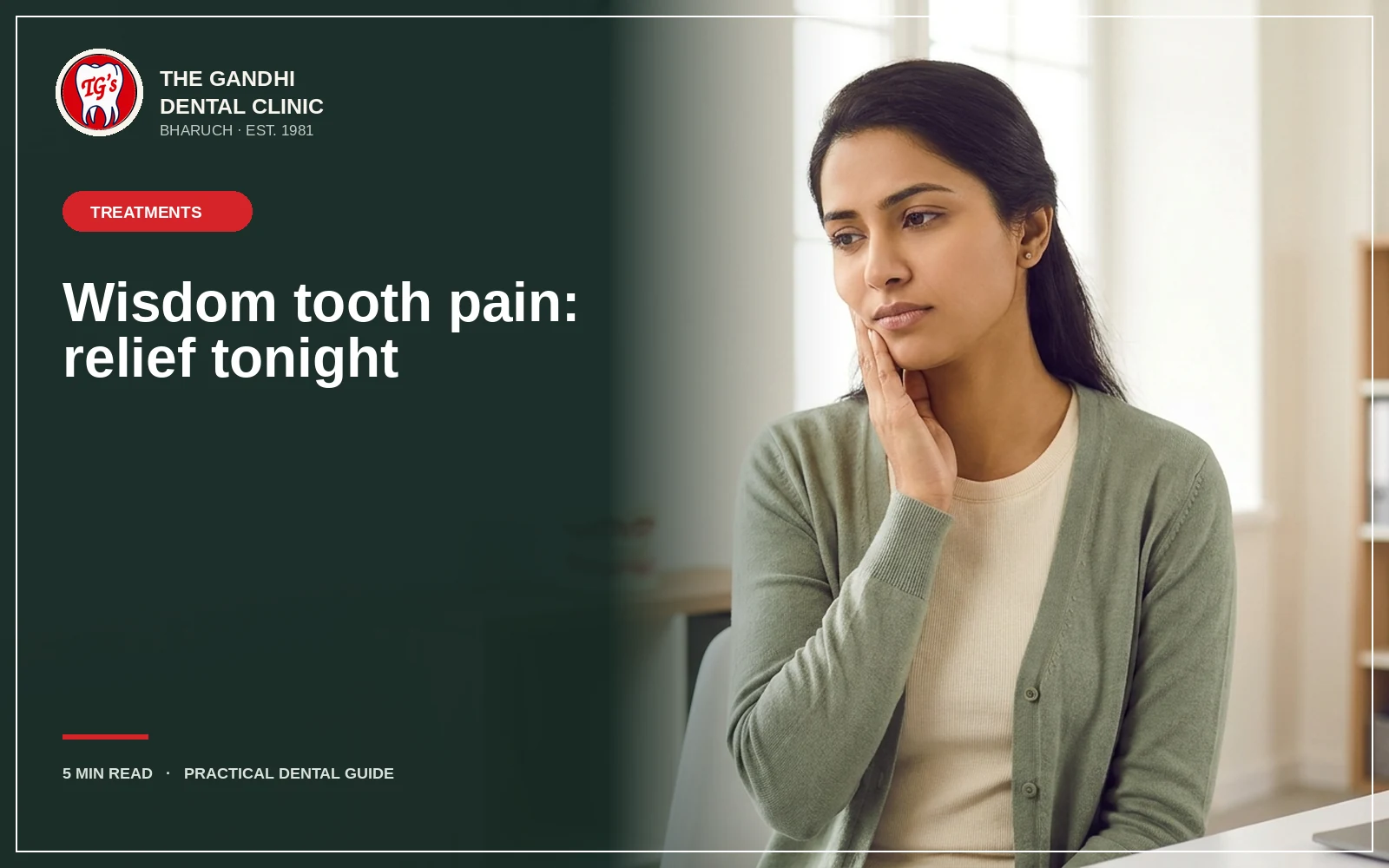
Wisdom teeth arrive between roughly seventeen and twenty-five, into a jaw that finished growing some time ago. Frequently there is not enough room, and the tooth ends up partly through the gum and partly under it.
Where the pain comes from
In most cases it is not the tooth that hurts — it is the flap of gum partially covering it. Food and bacteria collect underneath, the tissue becomes inflamed and infected, and the upper tooth bites onto the swollen flap and makes it worse. The clinical name is pericoronitis. It settles, then returns, then settles, then returns.
What helps in the short term
- Warm salt-water rinses, several times a day — this is one case where they genuinely help, because the problem is on the surface
- Careful cleaning right at the back, uncomfortable as it is
- Pain relief at the correct dose and interval
- A cold compress on the outside of the cheek for swelling
These manage an episode. They do not stop the next one, because the flap of gum and the space underneath it are still there.
When removal is the right answer
Not every wisdom tooth needs to come out. A tooth that is fully through, in a sensible position and cleanable can stay. Removal is generally advised when:
- The gum over it becomes repeatedly infected
- It is impacted against the tooth in front and causing decay there
- It cannot be cleaned properly no matter how carefully you try
- A cyst or bone loss shows on the radiograph
- It is causing pain that returns on a predictable cycle
The tooth in front is the underrated reason. An impacted wisdom tooth pressing against the second molar traps plaque exactly where you cannot reach, and the decay it causes is in a healthy, useful tooth. Losing that one to save an unnecessary tooth is a bad trade.
What the appointment involves
A radiograph first, always — it shows the root shape and the position of the nerve canal, and it determines the approach. The area is numbed thoroughly. A straightforward removal takes minutes. An impacted tooth needs a small surgical approach and usually a stitch or two.
Recovery, honestly
Swelling peaks around the second day, then goes down. Jaw stiffness for a few days is normal. Most people are comfortable within three to five days. The first twenty-four hours matter most: no rinsing, no spitting, no straws, no smoking. Those instructions exist to protect the blood clot, and dislodging it causes a dry socket — which is considerably more painful than the extraction was.
General information only. It is not a substitute for an examination — book an appointment for advice about your own teeth.
Common questions
Questions people ask
Gandhi Dental Clinic · Bharuch
Care built overgenerations.
Plan your visit with our dental team.